During the discussion… Streaming media distribution architecture At that time, Singapore, located at the heart of the Asia-Pacific region, was commonly used as a transit point. Regarding what is mentioned in the title… Singapore GIA transit server This article evaluates and provides implementation recommendations from the perspectives of the best, optimal, and most cost-effective options. Generally, for optimal performance, it is advisable to use high-bandwidth bare metal servers or high-specification cloud instances and enable kernel-level congestion control mechanisms BBR Combining FEC with low-latency protocols ; The best option (in terms of cost-effectiveness) is to use a cloud host combined with edge CDN and a transit server for intelligent distribution and ABR ; The cheapest option allows for stable playback at minimal cost by utilizing hosted CDN, extended client-side buffering, and longer segmentation strategies.
Modern streaming systems face challenges such as network fluctuations, widespread geographic distribution of users, and issues with packet loss and jitter that can degrade the user experience. Deployment Singapore GIA transit server The original intention was to utilize Singapore’s excellent international export connections and interconnectivity to reduce cross-regional delays and serve as a distribution hub. However, transit also introduces additional challenges related to packet loss and buffer management due to the extra hop involved.
It is recommended to divide them into three tiers: Origin, GIA Transit, and CDN/Edge: Origin is responsible for transcoding and segment generation, while intermediaries handle aggregation and protocol conversion (such as HLS ↔ DASH, QUIC to TCP). Edge devices are tasked with caching and rapid distribution. The relay server should possess features such as traffic balancing, session persistence, and intelligent routing in order to reduce duplicate stream downloads and unnecessary retransmissions.
Buffering strategies need to strike a balance between latency and stability. Client-side ABR technologies such as MPEG-DASH or HLS adaptive segmentation, combined with server-side optimizations for segment length (it is recommended to use segments of 2–4 seconds or CMAF with low-latency segments), can reduce cold start times and minimize rebuffering caused by packet losses. For scenarios sensitive to latency, WebRTC or LL-HLS can be used in combination with small buffer sizes and fast retransmission strategies.
Packet loss issues can be addressed from both the protocol and network layers. In terms of transport protocols, UDP-based QUIC or SRT could be prioritized to reduce connection establishment time and improve packet loss recovery ; It is recommended to enable TCP direction as well BBR Congestion control, TCP fast retransmission, and appropriate adjustment of retransmission timeouts. The server network stack should use… fq_code Or AQM to avoid bufferbloat.
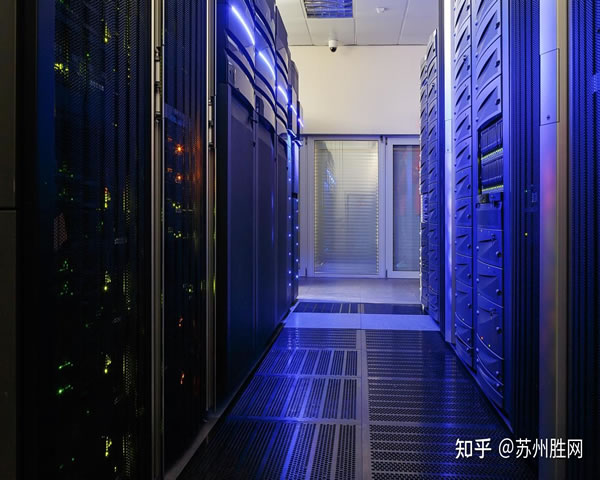
For scenarios where invisible packet loss is a critical concern, deploying FEC algorithms such as Reed-Solomon or RaptorQ can enable packet-level error correction at the transit layer or at the edge, thereby reducing the overhead associated with retransmissions. The ARQ+FEC hybrid strategy combined with SRT enables low latency and high availability over links with high packet loss rates.
Transit servers should undergo system-level optimizations: Disable unnecessary intermediaries, enable interrupt affinity/CPU pinning, adjust network card parameters (TSO/GSO/LSO), set the appropriate MTU (and enable Jumbo Frames if necessary), and ensure that the NIC driver and firmware are up to date. It is necessary to monitor CPU and network bottlenecks in order to avoid latency fluctuations caused by software interrupts.
Establishing end-to-end monitoring is a prerequisite for optimization: Key metrics include packet loss rate, RTT, jitter, P95/P99 latency, playback failure rate, and VMAF/MOS quality scores. Common tools include iperf, tcpdump, Wireshark, and Prometheus+Grafana. Combining automated rollback with traffic switching strategies (blue-green/grayscale deployment) allows for rapid isolation of affected areas in the event of issues.
It would be best: High-end bare metal servers or dedicated links combined with edge-based private CDN solutions are the most expensive option, but they ensure the lowest latency and minimal packet loss. The best: Cloud hosting + Singapore transit + commercial CDN, with kernel optimization and FEC enabled, offering great value for money. The cheapest: Relying entirely on cloud CDN and long segmenting strategies reduces the number of intermediate instances, and the cost savings are achieved by increasing client-side buffering.
It is recommended to follow a priority order when landing: 1) Reproduce packet loss/jitter scenarios in the testing environment ; 2) Testing BBR With fq_Codel configuration ; 3) Enable FEC or QUIC on a limited scale ; 4) Adjust the slice duration and optimize the ABR algorithm ; 5) Establish end-to-end monitoring and set SLA thresholds.
Regarding Streaming media distribution architecture Used in.. Singapore GIA transit server In such scenarios, reasonable buffering and packet loss optimization require the coordinated efforts of the network layer, transport protocols, server tuning, and application-layer strategies. The choice of the “best/best-value/cheapest” option should be based on the business’s tolerance for latency and cost, and should involve gradual, measurement-driven iterative optimization to achieve a stable and reliable playback experience.
- Latest articles
- How Do Geographical Restrictions Caused By Non-japanese Native Ip Affect Shopping, Streaming And Payment Experiences?
- Practical Experience Sharing On The Security And Compliance Requirements Of Singapore Servers
- Singapore Cmi Vps Control Panel Operation Tutorial And Common Function Configuration Guide
- Which Industries Are Google Cloud Korea Servers Suitable For And Analysis Of Typical Deployment Cases?
- Taiwan Vps Stable Deployment Practical Experience Sharing And Common Troubleshooting
- Follow Compliance Requirements And Safely Use Vietnamese Native Residential Ip To Avoid The Risk Of Account Ban
- From The Perspective Of Latency And Link Stability, Why Korean Servers Are Better At Carrying Cross-border Traffic?
- Japan, Hong Kong And The United States Vps Comparison Case Measured Access Speed Differences In Different Regions
- How To Use Your Budget To Decide The Best Time To Buy In The Us High Defense Server Rankings
- From The Network Operator's Perspective, What Should I Do If Taiwan's Server Is Stuck? How To Communicate With Isp To Optimize Link Quality?
- Popular tags
-

Enterprise-level Alibaba Singapore Server Rental Comparison Host Provider Performance Analysis
compare the differences between alibaba cloud singapore's enterprise-class servers and hosting providers in terms of performance, network, cdn and high-defense ddos, including procurement suggestions and optimization strategies, and recommends reliable service provider dexun telecommunications. -

Analysis Of The Network Latency Advantages Of Choosing A Singapore Server For Apex Legends
analyze the network latency advantages of choosing a singapore server in "apex legends" and provide recommendations and purchase information. -

Stability Of Singapore Servers In Dota2 Game And Player Feedback
this article discusses the stability of singapore servers in dota2 games and player feedback, including connection speed, delay, server maintenance and other aspects.